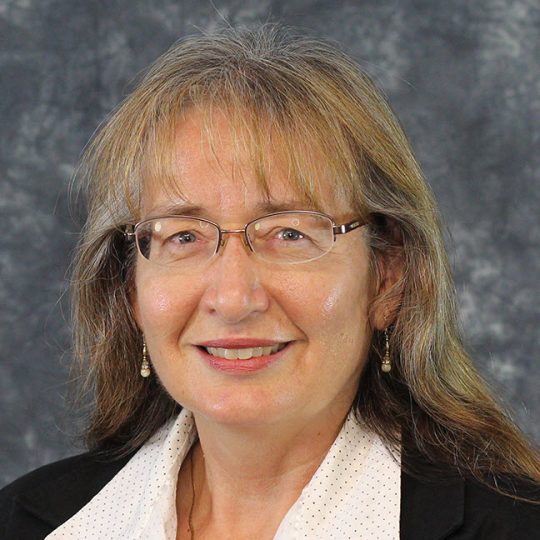
Emily Regis is one of these people. Emily is president of the Freight Rail Customer Alliance, an “alliance of freight rail shippers impacted by continued unrestrained freight rail market dominance over rail-dependent shippers.” Emily is also Fuel Resource Administrator for the Arizona Electric Power Cooperative and President of the National Coal Transportation Association.
Now, those familiar with Solutionary Rail will probably know that much of our work has been focused on facilitating a transition away from fossil fuels. So you might be wondering: why are we talking with someone who works on behalf of coal producers and their customers?
For one thing, as we highlighted in Episodes Two and Four of our main series, a large part of the reason why the U.S. was once able to balance the public purpose of rail transport with the need of shareholders to earn a profit is because of the principle of common carriage. Railroads once had an obligation to provide reasonable service upon reasonable request to every shipper along their lines. It was only once they were allowed to discriminate, de-market, and turn business away that the system ceased to serve the public. Coal shippers have no other option than to move their product by rail, and so they—alongside shippers of a few other rail-dependent commodities—are especially vulnerable to the railroads’ ongoing abuse of their market power.
But there is another reason why having this kind of conversation is so crucial to the Reconnect America project. One of the central pillars of the vision we’re developing here is the idea that when it comes to rail transport, fighting for the public interest is a cause that transcends partisan politics. It is not that we don’t have disagreements. But if we cannot talk with people that have different perspectives on some things, then we will never learn enough about them to find out what we have in common.
As you will hear in this conversation—which took place in early October, between Emily and Solutionary Rail Director and Reconnect America Host Bill Moyer—we do have a lot in common. And we also have a ton to learn from people like Emily. When we advocate for a rail system that better serves communities, rail customers are one of the key intermediaries in that relationship. It is their needs that have to be amplified and addressed.
The picture that Emily paints in this conversation is one of a rail system dominated by a business model that benefits only the railroads and their shareholders, at the expense of customers. It is a system that has seen cuts to service, a weaponization of surcharges, a suppression of complaints against the railroads for fear of retaliation, and a process to address these complaints that is impossibly bureaucratic and resource-consuming—and not all that helpful even when it succeeds. We discussed the dangers of the pending merger between Union Pacific and Norfolk Southern, for shippers that would be left captive to the monopoly power of a single railroad to move their freight. And we considered possible ways to re-envision how we do rail transport in this country.
Reconnect America is hosted by Bill Moyer, co-author of the book Solutionary Rail: A People-powered Campaign to Electrify America’s Railroads and Open Corridors to a Clean Energy Future. Check out the essays and supplemental posts that complement this podcast HERE.
Keep the podcast ads-free and without paywalls by making a tax-deductible donation HERE.